
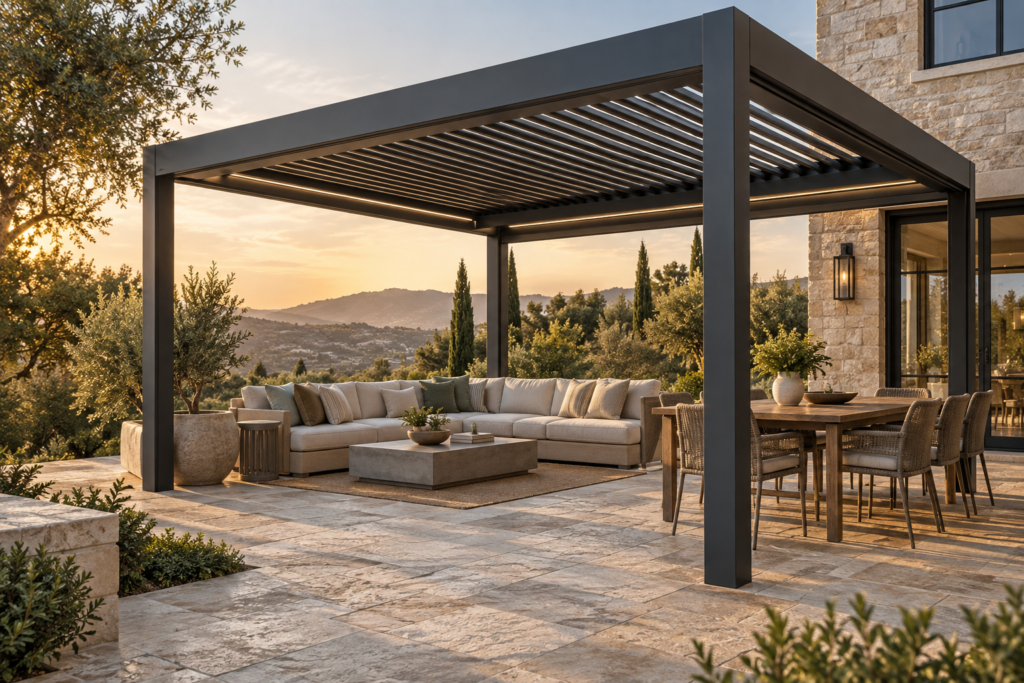
A pergola can turn an open patio or deck into a place you use more often—for outdoor meals, quiet mornings, or evenings with friends. The right choice depends on how much shade and weather protection you want, where the structure will stand, and how much maintenance you’re willing to take on.
Start With the Roof
Open-roof pergolas create a defined outdoor space and partial shade, but their beams or slats still allow sun and rain through. They’re a good fit if you like the open look or plan to add climbing plants or a shade canopy.
Fixed-roof pergolas offer more consistent coverage. Before buying, check what the roof material blocks, how rainwater drains, and whether the space beneath it will still get enough daylight.
Adjustable louvered pergolas let you change the amount of sun coming through the roof. Some use a hand crank; others have a motor. If you’re considering one, check how the louvers close, where water goes when it rains, and what the manufacturer says about snow and high winds.
Choose a Material You’ll Be Happy to Maintain
Wood offers a warm, traditional appearance that can suit a garden or established patio beautifully. Plan for periodic cleaning and refinishing; the upkeep depends on the wood and finish.
Aluminum suits a clean, contemporary look and generally needs less routine upkeep than wood. Compare the finish, hardware, warranty, and availability of replacement parts—not just the frame color in the photographs.
Other manufactured materials may offer the appearance of painted wood with different maintenance needs. Check each product’s construction and care instructions rather than assuming all “low-maintenance” pergolas are alike.
Measure the Space Before Choosing a Size
Mark the proposed footprint on the ground. Place your table, chairs, grill, or lounge furniture within it, leaving room to walk around them. A pergola that looks generous in a product photo can feel crowded once the furniture is in place.
Check both the outside dimensions and the usable space between the posts. Measure the height, too: the roof should feel comfortable underneath while fitting below nearby eaves, windows, and tree branches. Think about where the sun reaches the space at the times you expect to use it most.
Decide Between Freestanding and Attached
A freestanding pergola can define a seating or dining area anywhere suitable in the yard. An attached pergola connects to the home and can make the patio feel like an extension of the indoor living space.
Before ordering either style, ask your local building department about permits, setbacks, footing requirements, and applicable wind or snow loads. If the pergola will sit on a deck, confirm that the deck and proposed attachment can support it. Ask the manufacturer for installation drawings and load information so you can check whether the model suits your location.
Compare the Full Project Cost
The pergola price may be only part of your budget. Delivery, installation, footings, permits, and electrical work for lights or a motor can add to the total. Screens, shades, heaters, and other accessories may also be sold separately.
Before choosing a model, ask for an itemized estimate of the complete project. If you’re considering a motorized roof, check what happens during a power outage and what the warranty covers for the motor and controls. For a kit, review the installation instructions before deciding whether you want to assemble it yourself.
Questions to Ask Before You Buy
- How much shade and rain protection do I need?
- Will my furniture fit comfortably between the posts?
- Is my patio or deck suitable for mounting this model?
- Does the manufacturer provide wind and snow load information for my location?
- What maintenance, warranty support, and replacement parts are available?
- What will the entire installed project cost?
The best pergola is one that fits your space and the way you’ll use it. Start with the roof and your site conditions, then compare materials, features, and the full installed cost. That approach will help you choose a structure you’ll enjoy well beyond its first summer.