
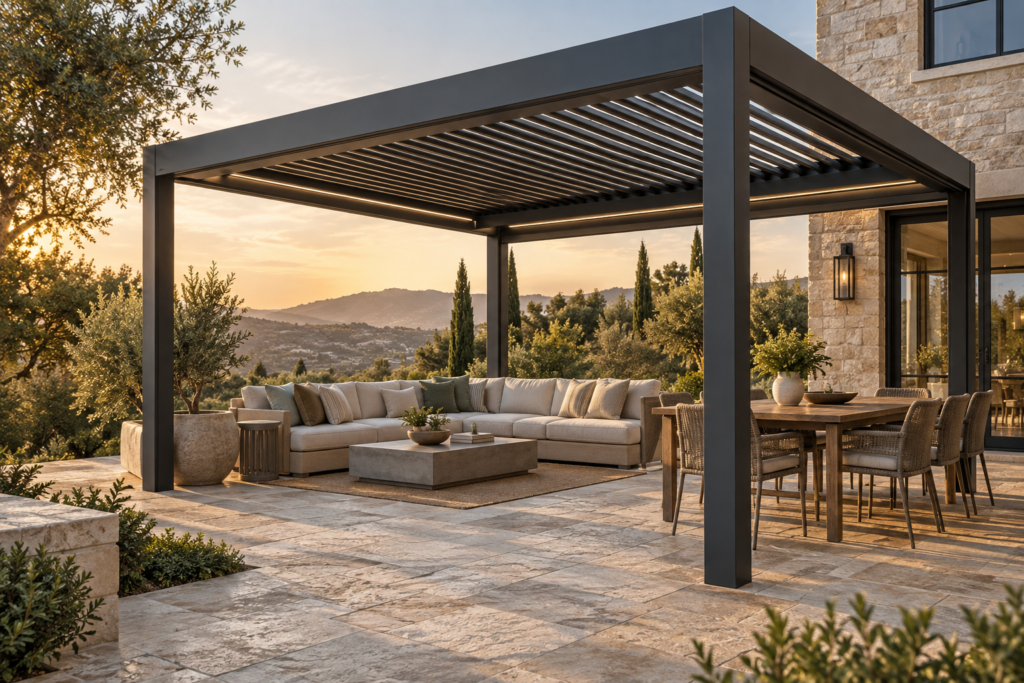
A pergola can transform an exposed patio or backyard into a more comfortable and inviting outdoor living space. Choosing the right one, however, involves more than selecting an attractive design. Size, materials, roof style, weather resistance, installation requirements, maintenance, and total cost all influence how well a pergola will perform over time.
This guide explains the most important decisions to make before purchasing a pergola. Whether you want a simple open-roof structure for partial shade or a motorized louvered system with greater weather protection, understanding the available features will help you choose a pergola that fits your home, climate, lifestyle, and budget.
Start With How You Want to Use the Space
Begin by deciding what you want the pergola to do. Some homeowners primarily want shade over a seating area, while others want a defined space for dining, entertaining, an outdoor kitchen, or a hot tub. Your intended use will affect the ideal size, placement, roof design, and accessories.
Think about when you expect to use the space. An open-roof pergola can provide filtered shade while preserving an airy feeling, but it offers limited protection from rain. A solid-roof or adjustable-louvered pergola can create a more sheltered environment and may allow you to use the space during a wider range of weather conditions.
Also consider the furniture and features that will sit beneath the structure. Allow enough room for chairs to slide back, people to walk comfortably, doors to open, and grills or other appliances to maintain the clearances recommended by their manufacturers.
Choose the Right Pergola Style
Pergolas are available in several configurations. A freestanding pergola can be positioned almost anywhere with a suitable foundation, making it useful for creating a separate destination in the yard. An attached pergola connects to the house and can provide a natural transition between indoor and outdoor living areas.
Traditional pergolas have fixed beams or rafters that create partial shade while allowing sunlight and rain to pass through. Retractable-canopy models add flexible overhead coverage, while louvered pergolas use adjustable slats that can open for sunlight or close for greater shade and rain protection.
Motorized louvers offer convenient operation and may include rain sensors or smart controls, but they also add mechanical components, electrical requirements, and potential maintenance costs. Manual systems can cost less and be simpler to maintain, although adjusting them requires more effort.
Compare Pergola Materials
Material affects a pergola’s appearance, durability, maintenance needs, and price. Wood offers a warm, traditional look and can be painted or stained to coordinate with a home. However, it generally requires periodic sealing, staining, or painting to help protect it from moisture, insects, fading, and decay.
Aluminum pergolas are popular for their clean appearance, strength, and relatively low maintenance. Powder-coated finishes can help resist corrosion and fading, making aluminum a practical option in many climates. Buyers in coastal areas should look for finishes and fasteners designed to withstand salt exposure.
Vinyl pergolas resist rot and insects and typically require little more than occasional cleaning. Color and style selections may be more limited, and lower-quality vinyl can become discolored or brittle after prolonged weather exposure.
Steel can provide substantial strength but is heavier and must be adequately protected against rust. Whatever material you choose, compare the frame thickness, hardware, finish, stated wind and snow ratings, and the manufacturer’s maintenance instructions—not just the appearance.
Measure the Space and Plan the Placement
Measure the entire installation area rather than relying only on the pergola’s advertised dimensions. Account for roof overhangs, post bases, gutters, drainage outlets, stairs, doors, windows, walkways, and enough working space for installation and future maintenance.
Observe how sunlight moves across the area during the times you expect to use it. The direction of the rafters or louvers can affect the amount of shade beneath the pergola. Also consider prevailing winds, nearby trees, roof runoff, underground utilities, and how the structure may affect views from inside the home.
Before ordering, mark the proposed footprint with stakes, tape, or outdoor-safe chalk. Arrange the intended furniture within that outline to make sure the space feels comfortable rather than crowded. Confirm the pergola’s exterior measurements and usable interior dimensions, as posts and framing reduce the space available underneath.
Check Weather Resistance and Structural Ratings
A pergola must be appropriate for the conditions where it will be installed. Wind, snow, heavy rain, salt air, intense sunlight, and freeze-thaw cycles can place very different demands on an outdoor structure. Do not assume that every pergola is designed for year-round use in every climate.
Review the manufacturer’s stated wind and snow-load ratings, along with any instructions for opening louvers, retracting canopies, removing snow, or preparing the structure for severe weather. Confirm whether those ratings apply only when the pergola is anchored to a specific type of foundation and installed exactly as directed.
Local building requirements may be more demanding than a product’s general specifications. Before buying, ask the local building department or a qualified contractor whether the proposed pergola and anchoring plan are suitable for your area. Buyers in hurricane-prone or heavy-snow regions should give structural ratings particular attention.
Understand Foundation, Permits, and Installation
A pergola needs a stable, level foundation and secure anchoring. Depending on the model and site, installation may involve a concrete slab, concrete footings, an engineered deck, or another manufacturer-approved surface. Pavers or thin patio surfaces alone may not provide adequate support for the anchors.
Do not assume an existing deck can safely support a pergola. The concentrated loads at the posts and the forces created by wind may require additional framing or reinforcement. A qualified contractor or structural professional can evaluate the proposed mounting location when there is any uncertainty.
Permit, setback, height, property-line, and homeowners association requirements vary by location. Attached pergolas may also require careful connection to the home so that loads and water are managed correctly. Check these requirements before ordering, because they can affect the allowed size, placement, foundation, and overall project cost.
Kit pergolas may be suitable for experienced do-it-yourself installers, but the components can be large and heavy. Professional installation may be worth the added cost for complex foundations, attached structures, electrical features, motorized louvers, or sites exposed to severe weather.
Evaluate Shade, Rain Protection, and Drainage
The amount of protection a pergola provides depends on its roof design. Fixed rafters create patterned shade but do not form a watertight roof. A fabric canopy can improve shade and provide limited rain protection, although it may need to be retracted or removed during strong winds, snow, or severe weather.
Adjustable louvers give you more control over sunlight and ventilation. When closed, well-designed louvers direct rainwater into integrated gutters, but they may not make the entire area completely waterproof. Wind-driven rain can still enter from the sides, and small amounts of water may pass through seams or joints.
Examine how the pergola collects and releases water. Look for gutters, downspouts, or drainage channels that direct runoff away from the house, post foundations, walkways, and seating areas. Ask whether these components are included, where the water exits, and how easily the drainage system can be cleaned.
Optional curtains, shades, or privacy screens can reduce low-angle sun and wind, but they also increase the surface area exposed to storms. Confirm when accessories must be retracted and whether they are included in the pergola’s weather ratings.
Plan for Lighting, Heating, and Other Accessories
Accessories can make a pergola more comfortable and useful, but they are easiest to plan before installation. Options may include integrated lighting, ceiling fans, heaters, outlets, speakers, privacy screens, curtains, insect screens, and motorized shades.
Determine which accessories are included with the pergola and which must be purchased separately. Some products are designed only for the manufacturer’s proprietary accessories, while others allow more flexibility. Confirm that the frame is engineered to support anything you plan to mount overhead.
Motorized louvers, lighting, fans, heaters, and outlets may require a dedicated electrical supply or additional circuits. All outdoor electrical work should use equipment approved for the location and be completed in accordance with applicable codes, permits, and manufacturer instructions—typically by a qualified electrician.
If you plan to place a grill, fire feature, or heater beneath or near the pergola, follow the equipment manufacturer’s required clearances from combustible materials. Adequate ventilation and safe placement are more important than fitting every desired feature into the space.
Compare the Total Project Cost
The advertised price of a pergola may represent only one part of the project. In addition to the structure, your budget may need to cover delivery, site preparation, concrete work, permits, installation labor, electrical service, drainage modifications, accessories, and removal of existing landscaping or structures.
Ask what is included in the quoted price. Anchors, mounting hardware, gutters, trim pieces, screens, lighting, and remote controls may be standard with one model but optional with another. Delivery charges can also vary significantly based on the size and weight of the shipment.
Consider long-term costs as well. Wood may require refinishing, fabric canopies may eventually need replacement, and motorized systems can require service or replacement parts. A higher initial price may be reasonable if it includes stronger construction, better weather resistance, professional installation, and dependable warranty support.
Create a complete project estimate before comparing models. This provides a more realistic basis for evaluating value than the pergola’s purchase price alone.
Review Maintenance, Warranties, and Support
Maintenance requirements vary by material and roof system. Routine tasks may include washing the frame, clearing leaves and debris from gutters, inspecting anchors and fasteners, lubricating moving parts, cleaning tracks, and refinishing wood. Review the maintenance schedule before purchasing so you understand the ongoing commitment.
Read the warranty carefully rather than relying only on its advertised length. The frame, finish, louvers, fabric, motor, electronics, and labor may each have different coverage periods. Some warranties require professional installation, product registration, specific anchoring methods, or documented maintenance.
Check which expenses the warranty covers. Replacement parts may be included while shipping, removal, installation labor, or travel charges are excluded. Also determine whether damage from wind, snow, salt exposure, improper drainage, unauthorized accessories, or failure to follow operating instructions is excluded.
Strong customer support matters, especially for motorized or proprietary systems. Look for accessible installation documents, responsive technical assistance, clear replacement-part procedures, and evidence that essential components will remain available after the sale.
Pergola Buying Checklist
- Decide how you want to use the covered space.
- Choose between a freestanding and attached pergola.
- Compare fixed rafters, canopies, and adjustable louvers.
- Measure the full exterior footprint and usable interior space.
- Confirm the wind and snow ratings for your location.
- Verify the required foundation and anchoring method.
- Check local permits, setbacks, height limits, and HOA rules.
- Plan drainage so water moves away from the house and seating areas.
- Identify any lighting, fans, heaters, screens, or outlets you want.
- Calculate delivery, site preparation, installation, and electrical costs.
- Review maintenance requirements and severe-weather instructions.
- Compare warranty coverage, exclusions, labor costs, and replacement-part support.
Making the Final Decision
The best pergola is not necessarily the largest, most elaborate, or most expensive model. It is the one that fits the available space, provides the level of shade and weather protection you need, and can withstand the conditions in your area when properly installed.
Compare pergolas according to their materials, structural ratings, roof systems, drainage, anchoring requirements, accessories, warranties, and total project costs. Careful planning before purchase can help you create an outdoor space that remains attractive, comfortable, and practical for years to come.